The Strategic Crossroads of the Media and Technology Landscape Consolidation Hardware Innovation and the Evolution of Digital Journalism


The landscape of American media and telecommunications is currently navigating a period of profound structural transformation, defined by the potential consolidation of legacy satellite providers, a pivot toward high-end streaming hardware, and a deepening crisis within the digital journalism sector. As traditional linear television continues its secular decline, industry titans and hardware manufacturers are recalibrating their strategies to survive an era where streaming is no longer a growth engine of infinite potential, but a "terrible business" requiring ruthless efficiency and technological superiority.
The Satellite Consolidation: A Merger Born of Necessity
For over two decades, the prospect of a merger between DirecTV and Dish Network has been a recurring theme in telecommunications circles, often dismissed by regulators on antitrust grounds. However, the current market reality—characterized by a massive exodus of consumers from traditional pay-TV to streaming services—has fundamentally altered the regulatory calculus. A combined DirecTV and Dish would unite approximately 11 million and 8 million subscribers, respectively, creating a single entity with roughly 19 million accounts.
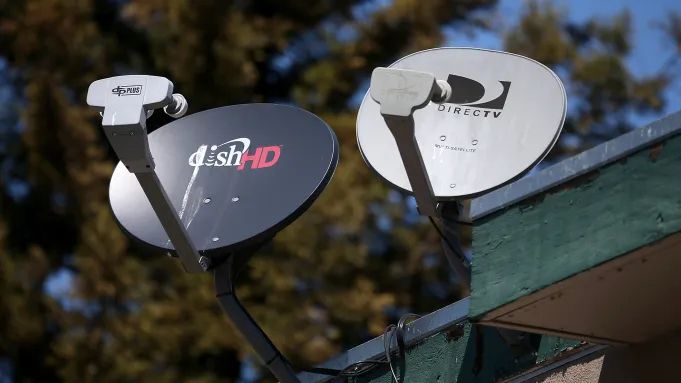
While this scale would theoretically provide the combined company with significant leverage in carriage negotiations with programmers, industry analysts suggest that the Department of Justice (DOJ) may now view such a merger as a defensive measure rather than a monopolistic threat. In 2002, when the DOJ blocked a previous attempt by EchoStar (Dish) to acquire DirecTV, the satellite industry was a burgeoning competitor to cable. Today, satellite providers are fighting for relevance in a market dominated by Netflix, YouTube, and Disney+.
The primary hurdle for such a tie-up remains the debt load of Dish Network’s parent company, EchoStar, and the complexities of the ownership structure of DirecTV, which is currently a joint venture between AT&T and the private equity firm TPG. Industry veterans suggest that any approval might come with "wholesale" requirements, forcing the merged entity to sell satellite capacity to third-party providers to maintain a semblance of competition in rural areas where high-speed broadband remains unavailable.
John Malone and the Streaming "Terrible Business"
The skepticism surrounding the current media environment is perhaps best articulated by Dr. John Malone, the legendary chairman of Liberty Media and a key architect of the modern cable industry. In a recent detailed discussion with analysts at MoffettNathanson, Malone characterized the streaming industry as a "terrible business," citing the high cost of content production and the fragmentation of the audience.
Malone’s critique centers on several strategic errors made by legacy media companies during their initial pivot to direct-to-consumer (DTC) models. According to Malone, the industry’s inability to create seamless, customized hybrid packages that blend on-demand content with linear experiences has left them vulnerable. Furthermore, he warned that escalating sports rights fees could "obliterate" the remaining margins of media companies unless they receive regulatory relief regarding net neutrality. Malone argues that tech giants—such as Amazon, Apple, and Google—operate with an unfair advantage in rights acquisitions because they do not rely on the same distribution economics as traditional media.
The solution, according to Malone, may lie in international markets. In regions where hybrid linear and on-demand packages are being successfully deployed, media companies are finding a more sustainable path. This "international flavor" of distribution is seen as a blueprint for the eventual stabilization of the U.S. market, which is currently over-saturated with standalone apps that suffer from high churn rates.
The High-End Hardware War: Google vs. Roku
As the software side of streaming struggles with profitability, the hardware sector is seeing a renewed focus on premium devices. For years, the Apple TV 4K held a near-monopoly on the high-end streaming box market, offering superior processing power and a clean interface for a premium price. This week, however, both Google and Roku signaled a direct challenge to Apple’s dominance.

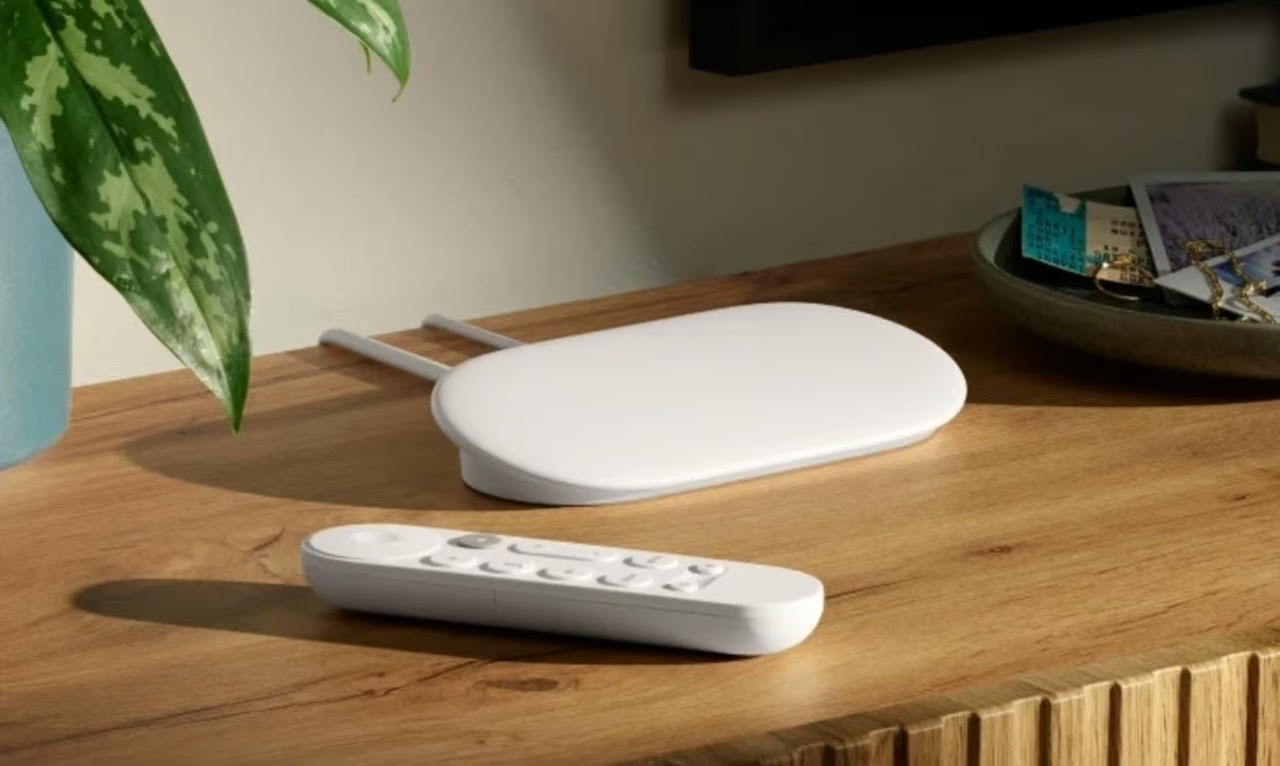
Google has officially retired its Chromecast line in favor of the Google TV Streamer, a $100 set-top box that serves as both a media hub and a smart home controller. By integrating the Matter and Thread protocols, Google is positioning the device as the "brain" of the modern living room. Simultaneously, Roku has refreshed its Ultra model, claiming a 30% increase in speed and introducing more sophisticated features for sports fans and families.
This shift toward more powerful hardware is driven by the increasing complexity of streaming applications. Features such as "multiview"—which allows users to watch up to four live streams simultaneously—require significant onboard processing power and memory. Fubo, the sports-focused virtual multichannel video programming distributor (vMVPD), recently launched a beta version of its multiview feature on Roku, but it is only compatible with the high-end Ultra devices. As app developers push the boundaries of the user interface, the industry is reaching a point where low-cost HDMI dongles may no longer be sufficient to provide a modern viewing experience.
Market Data: Consumption Peaks and Ad Load Fatigue
Despite the economic challenges facing media companies, consumer appetite for connected TV (CTV) remains at historic highs. According to a recent study by Wurl, CTV viewing levels are currently nearing the peaks observed during the COVID-19 lockdowns. This surge in engagement presents a significant opportunity for ad-supported tiers, but it comes with a caveat.

The Wurl study highlighted a critical threshold for viewer retention: for every additional minute an ad break lasts, a service loses approximately 4% of its audience. This "ad load fatigue" is a growing concern for streamers like Disney+, Netflix, and Amazon Prime Video, which have all introduced ad-supported tiers to bolster Average Revenue Per User (ARPU). The data suggests that while consumers are willing to tolerate commercials in exchange for lower subscription fees, the tolerance for "linear-style" heavy ad loads is non-existent in the digital space.
The Crisis in Digital Journalism and the Rise of AI
The broader shifts in the media industry are also reflected in the professional landscape of journalism. The "Next TV" column, a staple of technology, media, and telecommunications (TMT) reporting, recently announced its transition from original commentary to a curated newsletter format. This move is emblematic of a wider trend in the digital media space, where high-quality, original reporting is being deprioritized in favor of low-cost aggregation and AI-generated content.
A stark example of this trend can be seen in London, where the 197-year-old Evening Standard recently laid off 150 staff members and shifted to a weekly publication schedule. More controversially, the publication is exploring the use of an AI-driven "voice" to replicate the style of its late art critic, Brian Sewell. This prospect of "digital ghosts" replacing living journalists highlights the existential threat facing the "creative class."
For veteran journalists, the economic walls are closing in. Entry-level "staff writer" positions at many digital media companies now offer salaries as low as $10 per post, while experienced editors face a market where their skills are often met with apathy from corporate owners focused on short-term productivity metrics. The decline of original reporting in the TMT sector is particularly ironic given that the very technologies being covered—AI, streaming, and algorithmic distribution—are the primary drivers of the industry’s erosion.
Implications and Future Outlook
The convergence of these trends—satellite consolidation, hardware premiumization, and the decline of traditional media reporting—points toward a more bifurcated future. On one side, the "sweet hereafter" of linear television will likely be managed by a single, consolidated satellite entity serving a dwindling but loyal subscriber base. On the other, the streaming world will be dominated by tech giants that control both the distribution platform (hardware) and the content rights.
The move by Google and Roku into the premium hardware space suggests that the living room of the future will be more than just a place to watch movies; it will be an integrated ecosystem where the streaming box manages the lights, the security cameras, and the television. However, the sustainability of the content that fills these screens remains in question. As John Malone noted, the "terrible business" of streaming must find a new equilibrium, likely through higher prices, lighter ad loads, and the eventual winnowing of the competitive field.

For the professionals who document these changes, the path forward is increasingly independent. As traditional mastheads fade or pivot to AI, the responsibility for critical analysis is shifting toward newsletters and independent platforms, where the "acerbic assessments" of the industry can continue without the constraints of corporate consolidation. The evolution of the media landscape is far from over, but the era of the "all-you-can-eat" streaming growth phase has officially come to an end.